| |
| Wednesday, 16 September 2026 |
| InStitchYou: Adventures around the World with a Sewing Machine |
| Harriet Riddell |
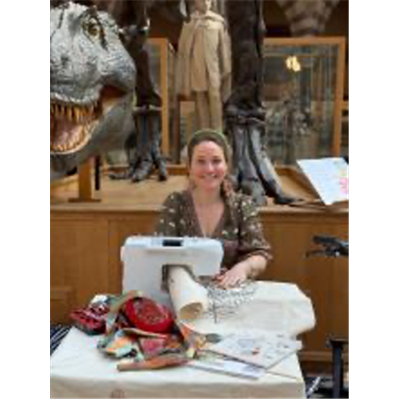 |
Artist Harriet Riddell takes her sewing machine out of the studio and into the world, stitching portraits and landscapes directly from life. Travelling through streets, marketplaces and mountainsides, she uses thread to capture the energy of place and the people she meets. Along the way, her sewing machine becomes an unlikely tool for communication, breaking down barriers and sparking conversations. With power generated by a bicycle — often pedalled by willing onlookers — Harriet transforms sewing into performance. Midway through the lecture, she will create a fast-paced stitched portrait live, so you can watch the process unfold. Harriet Riddell Harriet travels with her sewing machine pitching up in unusual locations from the informal settlements of Nairobi to the tea fields of the Himalayas. Through free motion embroidery she captures her surrounding environment and the people she meets.Adventure, interaction and finding a deeper connection with people are key elements to each piece of Harriet’s work. Behind every ‘stitch’ lies a narrative of people, place and culture. Finding ways to power a sewing machine in remote locations as been an ongoing theme. Harriet encourages her street audience to pedal a bicycle which generates electricity and powers the art. This increases the interaction between her, her subject and the art its self. Other times, batteries and solar panels are used to generate energy for her stitches. InStitchYou started in 2012 at the University of Hertfordshire, Harriet created a body of work in local pubs, cafés and laundrettes (anywhere with a table, chair and plug) then after graduating, InStitchYou took to Greenwich market, festivals and art fairs performing live Stitched Portraits, Stitching weddings and finding an intrepid spark with her sewing machine. Harriet has been fortunate to be a self employed full-time artist since 2012. Her work is always evolving and she takes great pleasure in sharing this adventure through lectures and invites students to have a go during study days. The Artist's prints, books, kits and courses can also be bought after the lecture. |
|
| Wednesday, 21 October 2026 |
| Sculpture; Hepworth and Frink |
| Raymond Warburton |
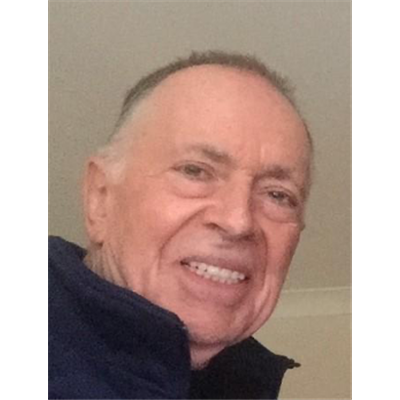 |
Barbara Hepworth took British and world sculpture to new levels of expressive lyrical abstraction. While we can look for meanings in them, her sculptures can be enjoyed and experienced simply for their look and feel. These days her sculptures have a timeless quality to them, which was a deliberate ploy as she sought to combine antiquity and mythology with the cutting-edge present. She also, early on, admired the Cubist and blockish Return to Order paintings of Picasso, and some of her figurative sculptures of the 1920s and 1930s reflected his influence. Elisabeth Frink is probably one of the most popular British sculptors of the 20th century. The subjects for her work were usually birds, horses and men. Her sculptures of birds, and hybrid bird-human forms, reflected the human condition as she saw it. Her sculptures of horses reflected her life-long fondness for these graceful animals. But it’s her sculptures of men that are her most startling or revelatory. That’s because, she saw men as both heroes and villains, and her sculptures of fallen (male) angels, Greek warriors and a Dying King reflect this point of view. In doing so she was heavily influenced by wartime experiences and memories. Raymond Warburton Ray has had a life-long love of art. However, in his twenties, Ray studied social sciences at the London School of Economics and the School of Oriental and African Studies. These studies led to a career in health and social care, with art being an evening and weekend passion. But all that changed in 2011, when Ray became a guide at Tate Britain and Tate Modern. Then from 2014 to 2017, he studied art history at the Open University, and then at the University of Buckingham, from where he gained an MA in the History of Art. And to cap it all, Ray became an Arts Society lecturer in 2017. Ray also knows what it’s like to be on the receiving end of lectures as he is a member of his local Arts Society in Blackheath. |
|
| Wednesday, 18 November 2026 |
| Secret Art in the Passport; how we use it to fox the forger |
| Martin Lloyd |
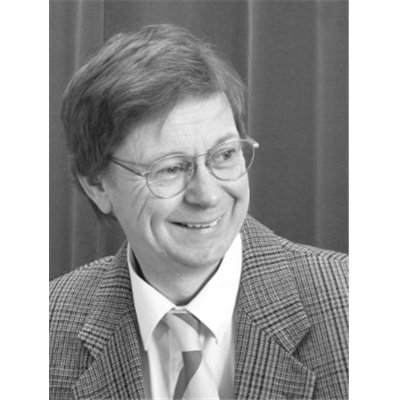 |
From the wax seal to the microchip, man has exploited the skill of the artist and artisan in his attempt to manufacture a forgery-proof document. Taking you through three centuries of passport design, this lecture explains the overt and uncovers the covert to illustrate the defences built in to the passport and the tricks the forger uses to defeat them. You will never see your passport in the same light again! Martin Lloyd Has been lecturing to various groups, including U3A, National Trust, historical societies, Gresham College and business groups since 2008. Previously worked for HM Immigration Service, and has broadcast on local and national television and radio. |
|
| Wednesday, 09 December 2026 |
| Christmas with Giles |
| Barry Venning |
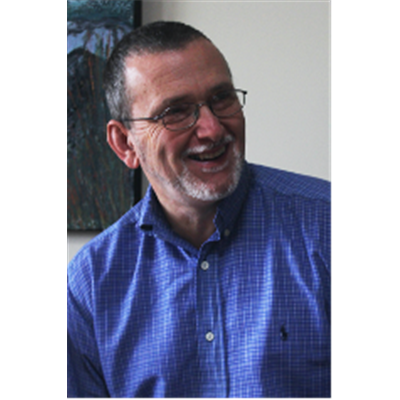 |
For a great many members of The Arts Society, the cartoonist Carl Giles was as much a part of the festive season as the Christmas tree, crackers and the Queen's Speech. So popular were the Giles annuals as Christmas presents that they helped to make him Britain's best loved, most successful and wealthiest cartoonist. The talk looks at Giles's life and work with a particular emphasis on his seasonal cartoons, particularly those featuring Grandma and the Giles family. They include some of his funniest cartoons but, as the art historian William Feaver pointed out, they also demonstrate that he had few equals when it came to representing Britain in Winter. Barry Venning Barry Venning is an art historian whose interests and teaching range from the art of late medieval Europe to global contemporary art. He has published books, articles and exhibition catalogue essays on Turner, Constable and European landscape painting, but also has an ongoing research interest in postcolonial art and British visual satire. He works as a consultant and associate lecturer for the Open University. His media work includes two BBC TV documentaries, radio appearances for BBC local radio and abc Australia, and a DVD on Turner for the Tate. |
|
| Wednesday, 20 January 2027 |
| Holbein and Shakespeare at the Court of Henry VII |
| Gabriel Chanan |
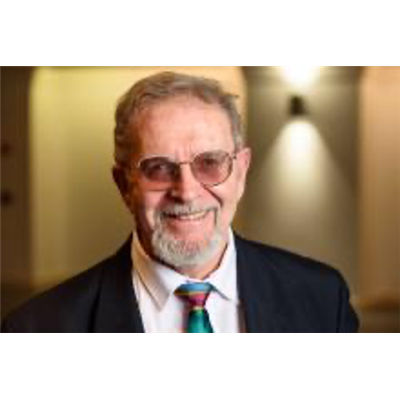 |
Holbein’s mere thirteen years in England defined for ever our image of the court of Henry VIII. These were the years of Henry’s infatuation with Anne Boleyn, and his seizure of the English Church. 75 years later Shakespeare’s picture is set in exactly Holbein’s time but sees the same characters differently. And both are different from Hilary Mantel’s ‘Wolf Hall’. This fully illustrated talk first looks at Shakespeare’s suspiciously truncated version of Henry’s story. Then through Holbein’s portraits we relive the events as he witnessed them at dangerously close quarters. The vivid objectivity of the portraits conceals the turbulence of the time. One after another Holbein’s sitters fall victim to Henry’s lethal mind-shifts, driving Holbein across the perilous boundary between the reforming Catholicism of Erasmus and Thomas More and the proto-Protestantism of Anne Boleyn and Thomas Cromwell. Finally we find surprising connections between an artist who left no writings and the playwright who was outstandingly articulate about almost every aspect of his time, but resoundingly silent on religion – and painting. Gabriel Chanan took up lecturing on art history in 2015, building on his lifelong interest in the arts during a career as a social researcher and policy analyst. He was the founding Chair of Windsor Community Arts Centre (now The Old Court). His study of the visual arts focuses mainly on realist painting, especially on points of transition between different periods and styles. Following publication of his book on Shakespeare and Democracy (2015) he also ran a small theatre company performing at arts centres and festivals till 2020. He was awarded an MBE for services to community development in 2009. |
|
| Wednesday, 17 February 2027 |
| Dress Code: 10 Iconic Dresses in Art |
| Alexandra Epps |
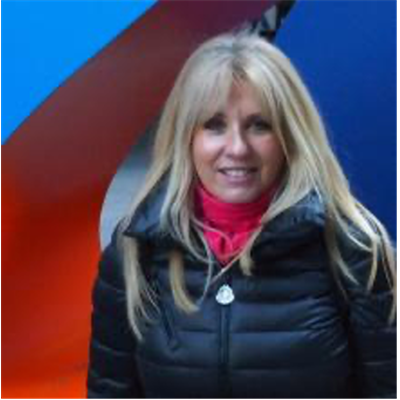 |
Ten iconic dresses within ten famous portraits from the nineteenth and twentieth centuries. Portraits that have shocked and delighted audiences in equal measure - the scandal of Sargent’s little black dress, Whistler’s ghostly women in white, Klimt’s golden visions fit for a queen to the swirling dreamlike drapery of Leighton’s Flaming June. Fashion and art has long been entwined and in the same way that every picture tells a story so too does every dress! Alexandra Epps Official Guide and Lecturer at Tate Modern, Tate Britain and the Guildhall Art Gallery. Qualified Guide to the City of London, offering walks, talks and tours about many aspects of the arts for societies, corporations and private individuals. Member of the City of London Guide Lecturers Association. Co-author of the book Lord Mayor's Portraits 1983-2014 (2015). Alexandra’s background is in design having practised as a graphic designer running her own design consultancy for many years. BA Saint Martins School of Art, MA London |
|
| Wednesday, 17 March 2027 |
| Joaquin Sorolla: Painter of Light |
| Jacqueline Cockburn |
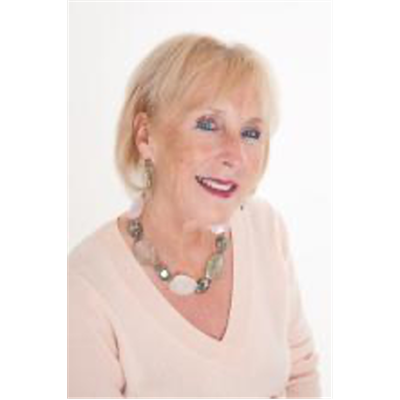 |
One of the most extraordinary Spanish artists from Valencia; Joaquin Sorolla has become better known more recently. He lived from 1863 to 1923 and created a world full of light and colour which delights the senses. Sometimes a social painter he was more concerned with capturing light falling on bodies and sea-scapes and his wonderful technique will be considered in this colourful lecture. His final Visions of Spain now in New York will also be shown. Jacqueline Cockburn Jacqueline is Managing Director of Art and Culture Travel, running residential courses in Andalucía, Southern Spain in the art and culture of the region as well as curated tours to Madrid, Tangiers, Barcelona, Paris and Venice. Jacqueline is a course director and lecturer at the V&A and also lectures at The Royal Academy, She has toured New Zealand and Australia for The Arts Society. Her specialist field is Spanish Art, but she also lectures on European Art 1790-1950. She is currently working on a Monograph on Goya (Prestel, Spring 2024) |
|
| Wednesday, 21 April 2027 |
| Skin: John Singer Sargent and the Scandal of Madame X |
| Justin Reay |
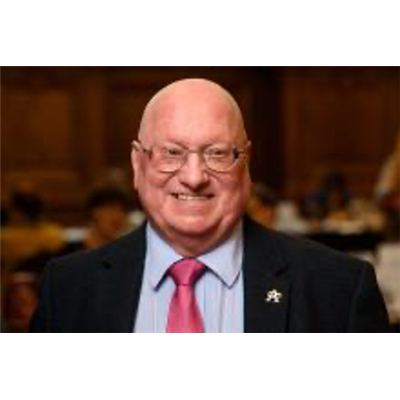 |
In 1883 a young artist in Paris implored a beautiful socialite to allow him to paint her. Over the following year John Singer Sargent laboured over what is considered to be his masterpiece, the portrait of Virginie Gautreau. The painting shocked its viewers with its connotations of sexual infidelity. It ruined Virginie’s reputation and destroyed Sargent’s career in Paris, but he would create a new life in England as the portraitist of high society. Justin discusses the public response to the painting known as Madame X, introducing questions about the sexuality of the artist and the self-identity of his subject. Justin Reay After officer service in the Royal Navy Justin had a long career in business management, latterly as Director of Studies for executive colleges in Oxford and Washington DC. He was one of the earliest consultants in knowledge management and e-learning, advising the UK Government, until he retired from business in 2000. Justin then studied the History of Art and Architecture at Oxford, and later studied Classical culture with the University of Athens. While researching for a doctorate in naval history, Justin was invited to join the Bodleian Library as a senior academic manager, advising external researchers and graduate students, editing manuscripts in the Bodleian's collections, and acting as the Bodleian’s internal consultant on maritime documents and artworks. He is a published historian. A qualified teacher, he is a tutor in the History of Art and Architecture and Classical Studies for independent colleges at Oxford and for private graduate students. He was recently commissioned to write a university preparation course on human creativity and innovation in the age of Artificial Intelligence. A member of the Arts Society West Oxfordshire, Justin is a frequent lecturer for The Arts Society with a wide range of talks, study mornings and study days on art history, painting, sculpture, architecture and decorative arts across cultures from antiquity to the modern era. |
|